Anastasiia Sosyniuk Delivers Workshop on AI Automation for the "Vidvazhna 3" National Accelerator

I recently gave an offline lecture in Uzhhorod as part of the national accelerator "Vidvazhna 3" — and I wanted to share how it went, along with why implementing AI in small and medium businesses is such a timely topic right now.
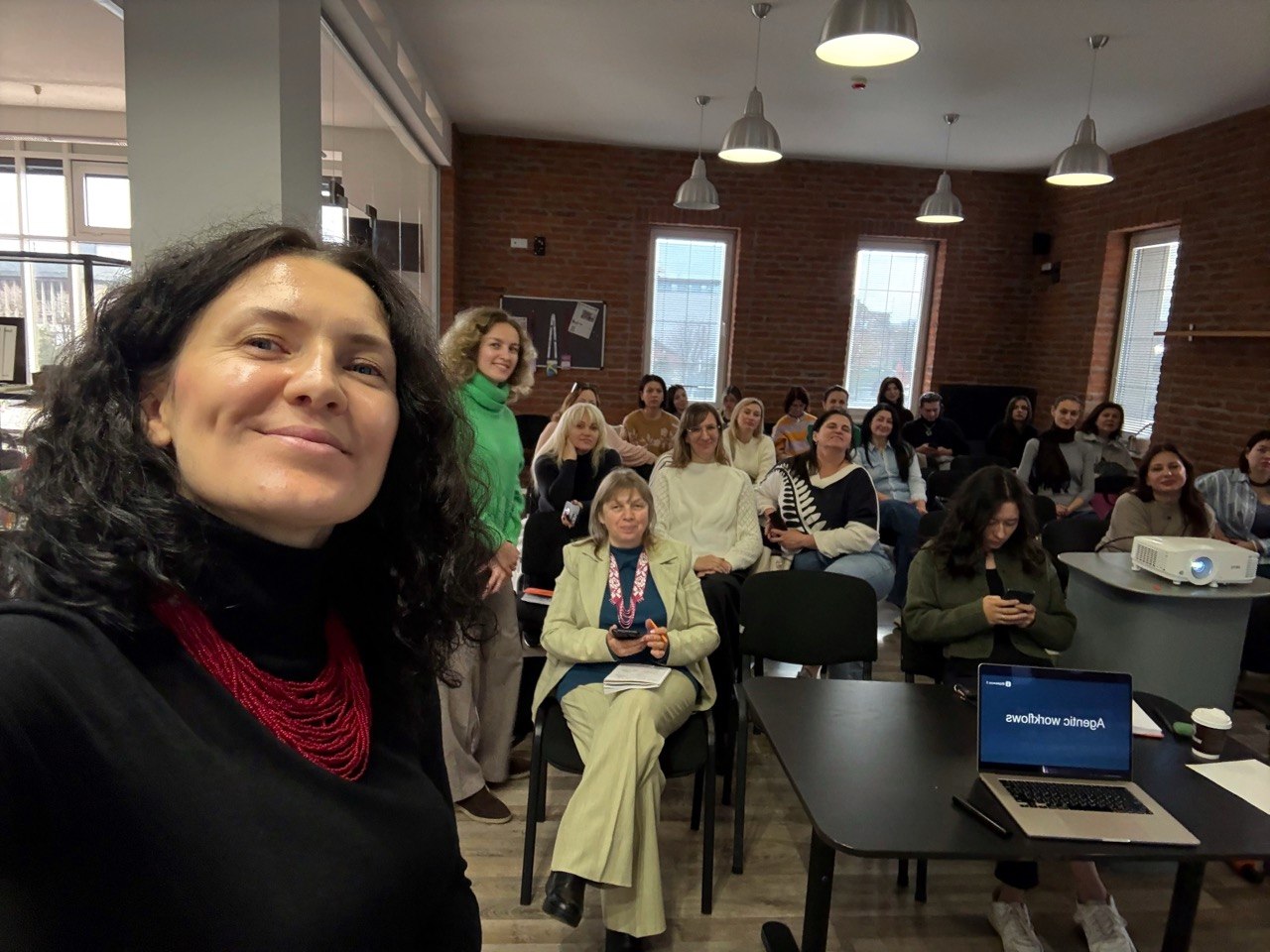
What is "Vidvazhna 3"
"Vidvazhna" (Ukrainian for "Fearless") is a vision accelerator for women entrepreneurs, run under the national Diia.Business project together with Ukraine's Ministry of Digital Transformation, the Office for Entrepreneurship and Export Development, and the global She's Next Empowered by Visa initiative. The third season is also supported by the IT Ukraine Association, the Government of Japan's support program, and UNDP.
This third season carries the subtitle "Digital Evolution of Business" and is aimed at active entrepreneurs who want to transform their business — from basic digital processes to strategic automation and expansion into new markets. The learning format combines two tracks:
-
National lecture series — offline and online lectures from digital transformation experts, open to everyone;
-
In-depth track — an intensive program with mentorship support, open by competitive selection after passing a digital maturity test.
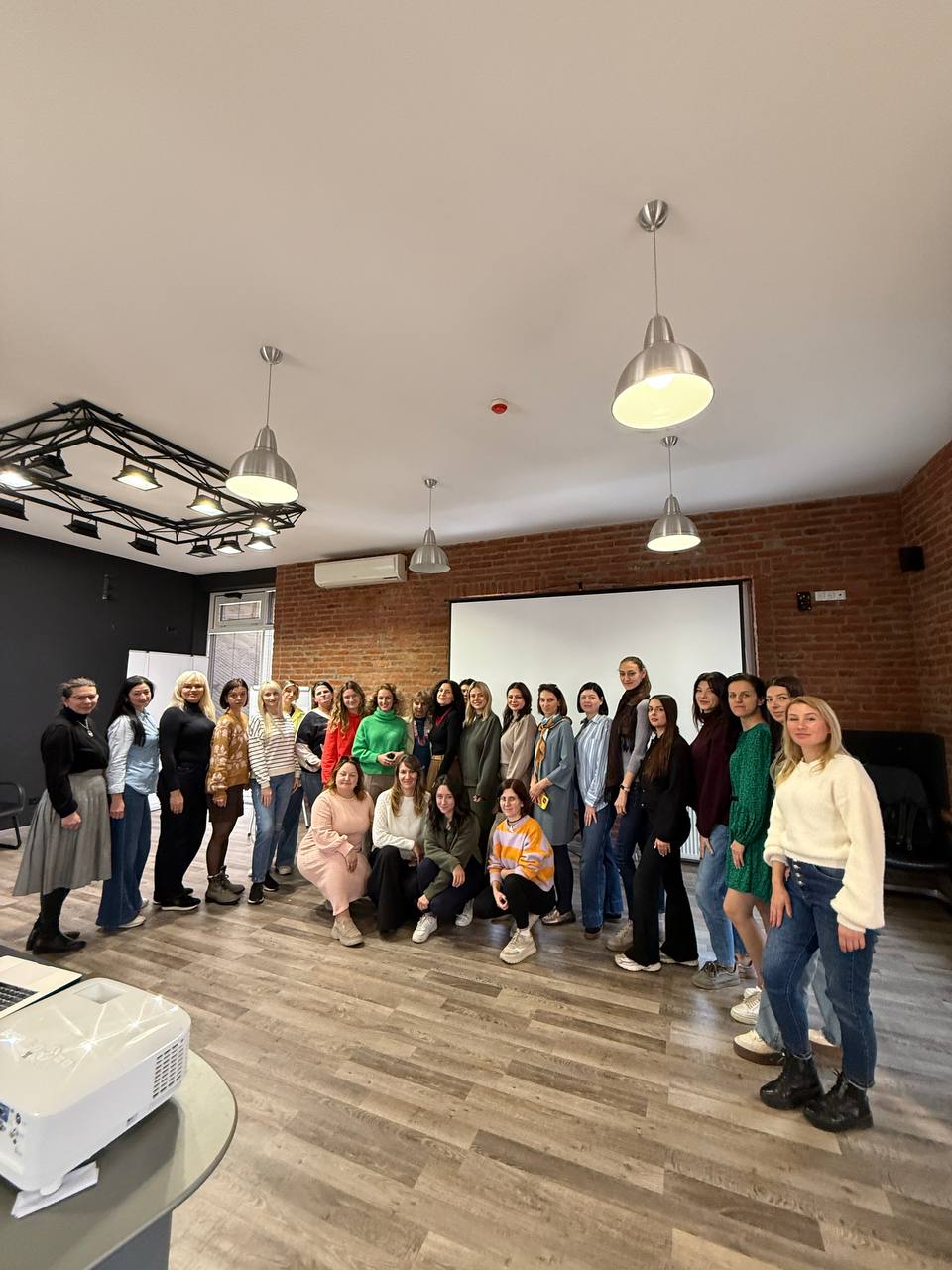
Program winners gain access to a grant fund for business development, along with mentorship and new business connections. It was an honor for me to speak as part of the National lecture series — to entrepreneurs who are already ready to act, not just talk about AI.
What the Lecture Covered: "Workshop on Implementing Smart Solutions"
My lecture in Uzhhorod was called "Workshop on Implementing Smart Solutions", and the core idea was simple: AI is not a trendy slide in a deck — it's a business tool that needs to solve a specific, concrete problem.
We walked through the key implementation formula:
Task → Data → Model/AI → Automation → Result
And unpacked the logic behind a "smart module" — a piece of a business that makes decisions, analyzes information, or performs actions without manual intervention from the owner. Using examples from different industries (cafés, beauty studios, real estate agents, education centers, craft production), I showed exactly what implementation looks like in practice: what data the business owner already has, which AI tool fits, and what result it delivers in terms of time and money.
A separate part of the talk was dedicated to how LLMs actually work — to demystify AI and explain it plainly: it's essentially "autocomplete on steroids," trained to predict text based on a massive dataset. From there, it's easy to understand why models sometimes hallucinate, and why the quality of input data directly determines the quality of the output.
We also ran a hands-on exercise called "Find Your Pain Point" — a short practice where each participant identified which process in her business consumes the most time and resources, what data already exists for it, and what an ideal automated outcome might look like. We wrapped up with practical prompt engineering: what makes a good prompt (persona, task, context, format) and which frameworks help structure requests to AI more effectively.
Why This Matters for Entrepreneurs
The main message of the lecture was: don't be AI-first — be AI-powered. AI doesn't replace the business owner, but it becomes an assistant-intern who's ready to work 24/7 — hardworking and energetic, but one who needs a clear task and oversight of the result.
For small and medium business owners, this is especially critical because:
-
Time is the scarcest resource. Business owners often juggle marketing, sales, and operations simultaneously — and automating one narrow, well-defined process delivers the biggest impact.
-
Precision beats ambition. The smaller and more specific the task, the more effectively it can be automated with AI today — there's no need to "implement AI across the whole business" at once.
-
Competition no longer leaves room to opt out. Either you use AI tools, or you fall behind those who already do — just as an engineer with a calculator will always outpace one without it.
-
One automation doesn't fix chaos — it scales it. That's why it's essential to first audit your processes, and only then choose the technology and the person who will be accountable for the outcome.
It was wonderful to see entrepreneurs from Uzhhorod and the surrounding region show up not just to listen, but with concrete questions about their own businesses — which is exactly the point of the "Vidvazhna 3" National lecture series: to give practical, immediately applicable tools rather than general theory about the future of AI.
Need a Training for These Topics for Your Team?
If this article sparked ideas for automating your own business, I run trainings and workshops — both online and offline — on the following topics:
-
AI Visibility & Generative Engine Optimization (GEO)
-
AI Search & Answer Engine Optimization (AEO)
-
B2B Marketing & Demand Generation
-
International Market Expansion
-
Content Strategy & Thought Leadership
-
Marketing Automation & AI Adoption
-
SEO in the Age of AI
Reach out — let's discuss the format and needs of your team.